
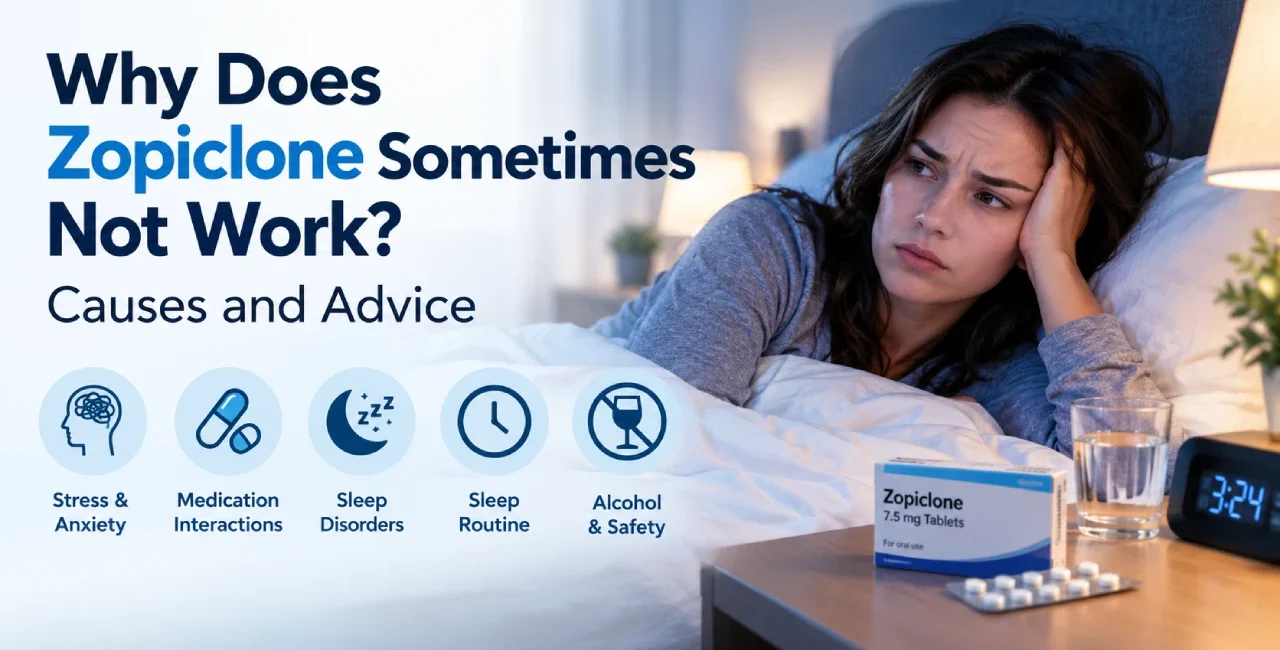
Why Does Zopiclone Sometimes Not Work? Causes and Advice
Zopiclone is a prescription medicine used for the short-term treatment of insomnia in adults. It is prescribed to help people who have difficulty falling asleep or staying asleep. However, some people find that the medicine does not always produce the expected results.
If you are searching for answers to why zopiclone sometimes does not work, several factors could explain the experience. These include stress, underlying sleep disorders, interactions with other medicines, changes in the body’s response to treatment and an inconsistent sleep routine.
Understanding these possible causes is important. Taking extra tablets or changing your prescribed dose without medical advice can be dangerous. This guide explains why zopiclone may seem ineffective, what factors can affect sleep, and when to seek professional advice.
How Does Zopiclone Work?
Zopiclone belongs to a group of medicines commonly called Z-drugs. It acts on the brain’s GABA signalling system, which helps regulate nervous system activity and produces a sedative effect.
Zopiclone generally begins working within approximately 30 to 60 minutes, although individual responses can vary. It is intended to help manage insomnia for a limited period rather than treat every underlying cause of poor sleep.
For reliable medicine information, read the NHS guide to zopiclone, which explains its uses, precautions and possible side effects.
Patients should use zopiclone only when it has been prescribed to them and follow the instructions provided by their healthcare professional.
1. Your Body May Have Developed Tolerance
One possible reason zopiclone becomes less effective is tolerance. Tolerance occurs when the body becomes accustomed to a medicine and its effects become less noticeable over time.
Repeated use of sedative medicines can contribute to tolerance and dependence. This is one reason zopiclone is generally prescribed for short-term treatment.
If your medicine no longer seems to help as it did initially, do not increase the dose or take an additional tablet. Speak to your prescriber, who can assess whether tolerance or another issue is contributing to your sleep difficulties.
The appropriate response is to review the treatment rather than attempt to overcome reduced effectiveness by taking more medication.
2. Stress and Anxiety May Be Affecting Your Sleep
Stress is a common contributor to insomnia. Work responsibilities, financial concerns, relationship difficulties and anxiety can make it difficult to relax at bedtime.
Although zopiclone has a sedative effect, it may not resolve every factor responsible for persistent sleep difficulties.
Some habits may help support better sleep:
- Maintain a consistent bedtime and waking time.
- Keep your bedroom quiet, comfortable and dark.
- Avoid caffeine late in the day.
- Establish a relaxing bedtime routine.
- Seek support if anxiety or persistent worry is affecting your daily life.
For ongoing insomnia, a healthcare professional may recommend cognitive behavioural therapy for insomnia (CBT-I), an evidence-based treatment that addresses behaviours and thought patterns associated with sleep problems.
3. Other Medicines May Affect Zopiclone
Interactions with other medicines can change how zopiclone works. Some medicines may reduce its effects, while others can increase sedation and the risk of harmful side effects.
Examples include certain epilepsy medicines, rifampicin and products containing St John’s wort. Other sedating medicines, including some opioid painkillers and antihistamines, may increase the risk of excessive drowsiness or breathing problems.
The effects depend on the specific medicines and individual circumstances.
Tell your doctor or pharmacist about all prescription medicines, over-the-counter products and herbal supplements you use. Do not stop or change another prescribed medicine without professional guidance.
4. An Underlying Sleep Disorder May Be the Cause
Zopiclone may seem ineffective when another health condition is interfering with sleep.
Potential causes include:
Sleep apnoea: Repeated interruptions in breathing can disrupt sleep and cause daytime tiredness.
Chronic pain: Physical discomfort may make it difficult to fall asleep or remain asleep.
Anxiety and depression: Mental health conditions can affect sleep duration and quality.
Restless legs symptoms: Uncomfortable sensations and an urge to move the legs may interrupt rest.
Irregular sleep schedules: Shift work, travel and inconsistent bedtimes can disrupt the body’s internal clock.
Identifying the underlying cause is important. If sleep problems continue despite following your prescription, arrange an assessment rather than attempting to adjust your medication yourself.
5. Your Sleep Routine May Be Contributing
Sleep quality depends on more than medication alone. Environmental disturbances, irregular working hours, late-night screen use and stimulating activities can all contribute to difficulty sleeping.
Zopiclone is generally taken shortly before bedtime according to the prescriber’s instructions. It is important to allow sufficient time for uninterrupted sleep and to follow all safety precautions.
Do not take another dose if you remain awake, and never exceed the prescribed amount.
Keeping a simple sleep diary can help you identify patterns. Record your bedtime, approximate sleep interruptions, caffeine intake and how you feel the following day. This information can be useful when discussing treatment with your healthcare professional.
6. Alcohol Can Make Treatment Less Safe
Alcohol should be avoided while taking zopiclone because the combination can intensify sedation and increase the risk of serious side effects, including breathing difficulties and reduced awareness.
Alcohol can also interfere with normal sleep patterns. Feeling sleepy after drinking does not necessarily mean that sleep will be restorative.
Do not combine zopiclone with alcohol or other sedating substances. If you have combined them and experience serious breathing difficulties, collapse or difficulty waking, seek emergency medical assistance.
7. Expectations About Sleep May Be Different
Some people expect a sleeping medicine to produce uninterrupted sleep every night. In reality, sleep is affected by physical health, emotional wellbeing, daily routines and the environment.
Zopiclone is intended to help manage short-term insomnia, but it does not guarantee a particular number of hours of sleep or eliminate every cause of waking during the night.
It is helpful to distinguish between difficulty falling asleep, waking repeatedly, waking too early and feeling tired the next day. These symptoms may have different underlying causes.
If you are reviewing medicine information, you can consult the Zopisign 7.5 mg product information page. This link is for reference only; the product should be used only when appropriately prescribed and supplied in accordance with applicable requirements. A different product or strength should not be selected without professional advice.
What Should You Do If Zopiclone Is Not Working?
If your prescribed treatment is not helping, consider the following steps.
1. Do Not Increase the Dose
Taking additional zopiclone can increase the risk of overdose, excessive sedation, impaired coordination and breathing problems. Follow your prescription exactly.
2. Review Your Medication Instructions
Read the patient information leaflet and follow your prescriber’s directions. If you are uncertain about timing or missed doses, ask a pharmacist rather than guessing.
3. Check for Possible Interactions
Discuss your medicines, supplements and any alcohol use with a healthcare professional. They can assess whether interactions or side effects may be contributing.
4. Review Your Sleep Habits
Consider whether caffeine, stress, irregular bedtimes or environmental disturbances are affecting your sleep.
5. Arrange a Medical Review
Persistent insomnia or reduced treatment effectiveness may require reassessment of the underlying cause and your treatment plan.
6. Do Not Stop Regular Treatment Abruptly Without Advice
Regular use can lead to physical dependence. If you have been taking zopiclone regularly, consult your prescriber before stopping, as a gradual reduction may be necessary.
If you have taken more than the prescribed dose, seek urgent medical advice. Serious breathing problems or difficulty waking require emergency assistance.
When Should You Speak to a Doctor?
Speak to your doctor or pharmacist if:
- Zopiclone is no longer helping you sleep.
- Your insomnia continues or repeatedly returns.
- You experience troublesome side effects.
- You have been taking the medicine longer than originally prescribed.
- You use other medicines that may interact with it.
- You experience unusual behaviours during sleep.
Seek urgent medical assistance for serious breathing difficulties, severe confusion, a serious allergic reaction or other potentially life-threatening symptoms.
People with sleep apnoea, breathing problems, liver conditions or a history of substance dependence may need additional assessment before using sedative medicines.
For general questions about website information, you can also visit the website FAQ or the contact page. These pages do not replace individual medical advice.
Possible reasons include tolerance, stress, underlying sleep disorders, interactions with other medicines and inconsistent sleep habits. A healthcare professional can help determine which factors may be involved.
It generally begins working within around 30 to 60 minutes, although individual responses vary. Follow your prescription rather than taking extra medication if the expected effect does not occur.
No. Do not take an additional tablet during the same night or exceed your prescribed dose. Extra medication can cause serious harm.
Yes. Certain medicines, including some epilepsy treatments, rifampicin and St John’s wort products, may reduce its effects. Other medicines can increase sedation and related risks. Ask a pharmacist to review your medication list.
Zopiclone is generally intended for short-term treatment because continued use can lead to tolerance and dependence. Follow your prescriber’s instructions and seek advice before extending treatment.
Arrange a medical review to identify possible physical, psychological or lifestyle causes. Your healthcare professional can discuss suitable treatments, which may include CBT-I or other approaches depending on your circumstances.
Conclusion
When zopiclone does not seem to work, the cause may be tolerance, stress, an underlying sleep disorder, medicine interactions or an inconsistent sleep routine.
Increasing the dose independently is not a safe solution. Follow your prescription, avoid alcohol, discuss possible interactions with a pharmacist and seek medical advice if insomnia persists.
Understanding the cause of sleep difficulties can help you and your healthcare professional make informed decisions about appropriate treatment and long-term sleep health.
Medical disclaimer: This article provides general educational information and is not a substitute for individual medical advice, diagnosis or treatment. Zopiclone is a prescription medicine and should be used only by the person for whom it was prescribed, according to the directions of a qualified healthcare professional.